
Your Rebuilding Options

The following information provides clear guidance to help homeowners assess what they can build and understand the constraints and parameters that will influence their rebuilding project. As you may have seen with this hub, several policies govern the type and scale of buildings allowed for your project. These laws and regulations can inform questions such as:
- What is the allowable square footage?
- How tall can the building be?
- Can I build a second story?
- Can I add an Accessory Dwelling Unit (ADU)?
These factors help determine whether your project is feasible under the law. Beyond legal requirements, other considerations, such as project timelines and economics, also affect how you plan your rebuild.
1. Deciding Where and How to Build
Whether you choose a “like-for-like” rebuild or a new build can impact the permitting process with your city or county. Although fire-impacted properties are generally prioritized, new builds often require additional planning compliance review due to modifications, which may extend the timeline. Consider whether a longer timeline will affect your project goals.

Rebuilding a basement or planning a new one will significantly impact your budget and timeline, as well as needing additional studies and reviews to ensure compliance with existing building codes. Other architectural elements like pools and second stories can also be impactful for the rebuild.
2. Policy Interventions
The inclusion of an ADU or other interventions, such as SB9 lot splits, will also affect the time required for compliance review, design development, construction, and permitting.

Planning for a lot split under SB9 might allow you to sell part of your lot to gain additional resources for building your home, but there are some restrictions. The process can take up to six or nine months, and properties in very high and high fire hazard zones may be restricted from this policy.
3. General Timeline Considerations
The time required to develop an architectural project depends on project complexity, the availability of your architect or contractor, and external factors such as permitting processes in different jurisdictions or the availability of subconsultants.
Average timelines for a rebuilding project:
| Step | Description | Average Timeline |
|---|---|---|
| Conceptual Design & Design Development | This phase defines the vision and feasibility of the home through site analysis, homeowner input, design refinement and cost alignment. | 4–6 months |
| Construction Documents | Detailed architectural and engineering drawings are prepared to fully define the project for permitting, pricing, and construction. | 3–5 months |
| Permitting | The project is reviewed by local agencies for zoning and building code compliance, with revisions made as needed to secure approvals. | 2–4 months |
| Construction | The home is built from foundation to finish through coordinated construction, inspections, and final approvals for occupancy. | 12–18 months |
Budget is a major determinant of whether you can rebuild your home as envisioned. Key considerations include:
- Available resources: Insurance, loans, savings, etc.
- Soft costs: Expenses not directly tied to construction, such as architect/contractor fees, surveys, and permitting fees.
- Direct costs: Expenses directly related to construction, typically estimated by multiplying the proposed square footage by the average construction cost per square foot.
Note! Building Code Upgrades and Insurance:
- Coverage can help pay for upgrades required to comply with current codes, including fire-resistant materials, energy efficiency, and structural improvements.
- Your insurance may include demolition, debris removal, and retrofitting such as seismic reinforcements, electrical, and plumbing upgrades.
To assist with this, we have developed a simple format to analyze these costs, which can help you approximate the total cost of your project.
Proforma format: Anonymized Example Work Plan
2. Long-Term Economic Stability
It’s important to consider whether rebuilding affects your ability to remain in the community. One key factor is property taxes:
- Proposition 13: Some properties in California benefit from lower property taxes under this law, while others do not. If your property is grandfathered under Proposition 13, you may want to consider rebuilding something very similar to your original home in order to maintain that favorable property tax status.
- Property Tax Reassessment: Increasing your property’s square footage may trigger a reassessment by the Los Angeles County Assessor’s Office.
Let’s review what this means!
Misfortune & Calamity (M&C) Relief Program
This program, administered by the Tax Assessor’s Office, allows homeowners to rebuild while retaining their pre-damage tax base. There are two main standards:
- 120% Rule for Governor-Declared Disaster Areas:
- If the rebuilt property’s value is within 120% of the pre-damage value, it will not be reassessed, but many homeowners may not qualify due to increased property values and construction costs.
- Substantial Equivalence:
- Homeowners retain their pre-damage tax base if the rebuilt structure is substantially equivalent in size and use to the original.
- Additions exceeding the substantial equivalent, such as a bathroom or an ADU, are considered new construction and may be reassessed separately.
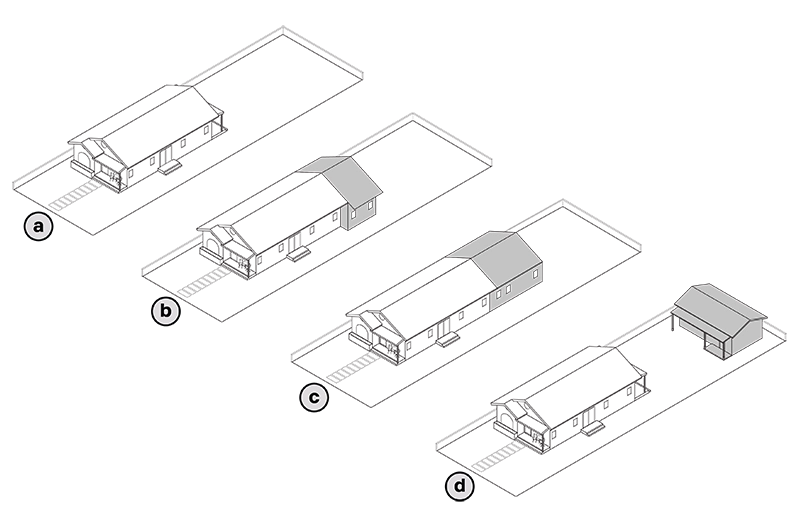
Rebuilding in a certain way can impact your long-term financial sustainability, review thoughtfully what are the options that best serve your process.
- Like-for-Like Rebuilds within the first 5 years: No reassessment; the property retains its original base year value, adjusted only for minor inflation.
- Increased Square Footage: The additional portion is reassessed at market value; the original portion retains its prior assessed value.
- Substantial Alterations: Renovations exceeding 50% of the structure may be considered new construction and fully reassessed.
- ADU Construction: The ADU is typically assessed separately; the main structure retains its original value.
It is crucial for homeowners to evaluate the fire risk of their property. Los Angeles County publishes updated fire maps to:
- Inform property owners of potential fire hazards.
- Encourage construction using materials that improve safety and insurability.
Considering these risks in your rebuilding plans is essential for both safety and long-term insurance coverage.